
Quote comparison for a refrigerated truck body usually starts and ends with the price sheet. Two suppliers quote the same length, the same panel thickness and the same FRP skin — one comes in 20% cheaper. Six months later the cheaper body is delaminating at the door frame, the rear hardware does not match the drawing, and the spare parts promised for the second order do not fit the first. The price sheet told you almost nothing about any of that.
This guide is written for fleet builders, body shops and distributors who buy refrigerated or dry freight bodies from overseas suppliers — as complete bodies, sub-assemblies or flat-packed CKD kits. It lists ten checks that sit outside the price sheet, explains the red flags that hide inside low quotes, and shows how to structure a sample order that actually tests a supplier. None of it requires trusting anyone, including us.
Panel Maker vs Body Builder — Why the Difference Matters
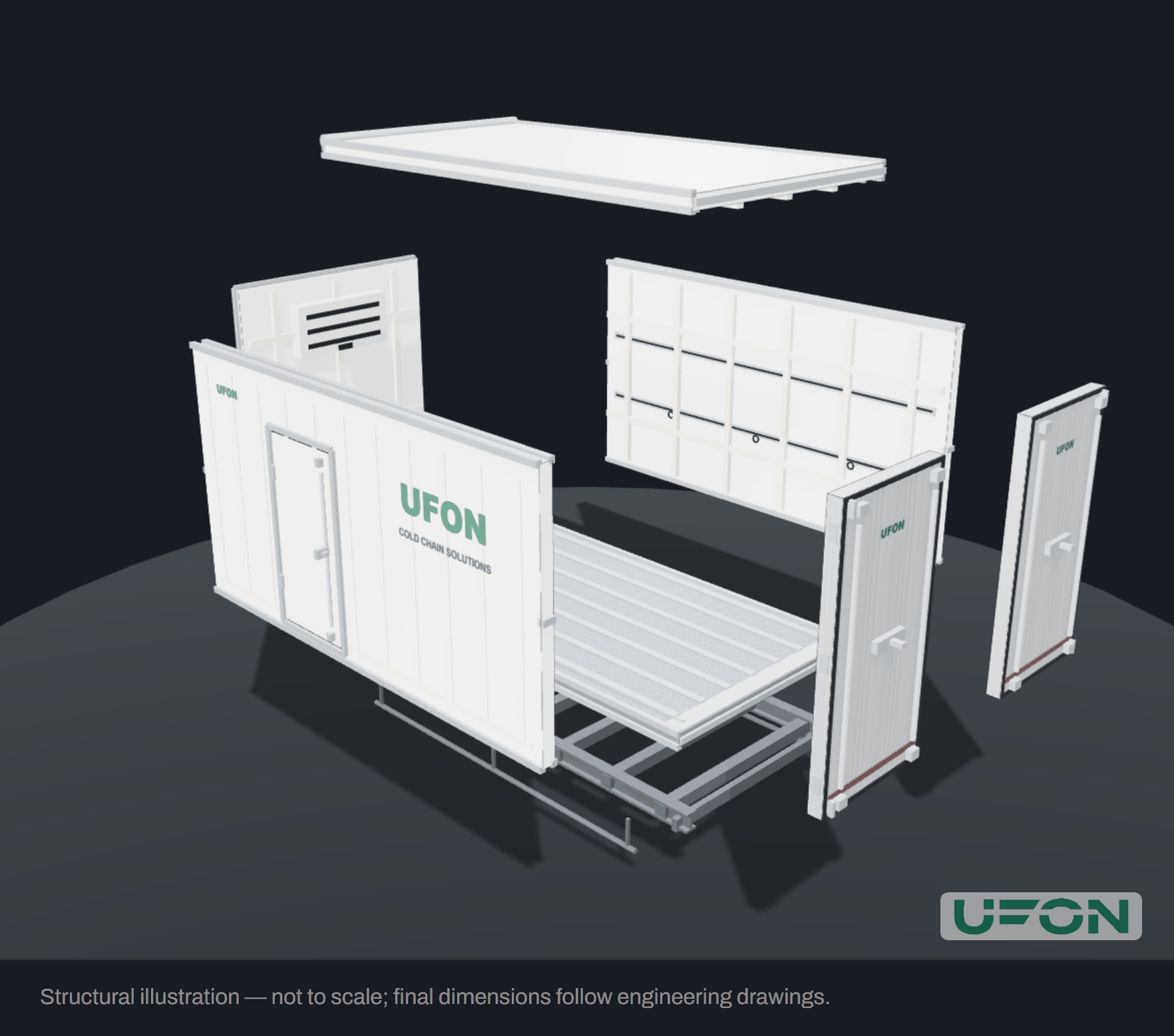
Sandwich panel factories and truck body builders overlap, but they are not the same trade. A panel maker's core competence is laminating flat sandwich panels at consistent quality. A body builder's competence starts where the panel ends: sub-frames, door apertures, corner profiles, hardware, seals, refrigeration-unit mounting, and the drawings that make all of it fit a specific chassis. Many 'truck body kit' offers on B2B marketplaces are panel factories reselling a kit concept — the panels may be excellent, while the engineering around them does not exist.
A refrigerated body is a system of structural modules, and a missing or wrong module does not announce itself until assembly day. So before comparing anything else, establish which trade you are actually talking to: ask who designs the sub-frame, who details the rear frame and door hardware, and who signs the assembly drawing. Neither trade is "better". If you run your own body shop with in-house engineering, buying panels from a specialist panel maker can be exactly right. If you need a body that arrives ready to assemble, with a drawing set and hardware matched to your chassis, you need a body builder. The expensive mistake is paying for one while assuming you bought the other.
The 10 Checks Before You Shortlist a Supplier
None of these checks requires a factory visit. All ten can be run from your desk with one well-written enquiry — and the answers, or the silence, will do most of the shortlisting for you.
| # | Check | What to ask for | Red flag |
|---|---|---|---|
| 1 | Drawings & BOM completeness | A sample assembly drawing and bill of materials for a comparable body | "We confirm details after the deposit." |
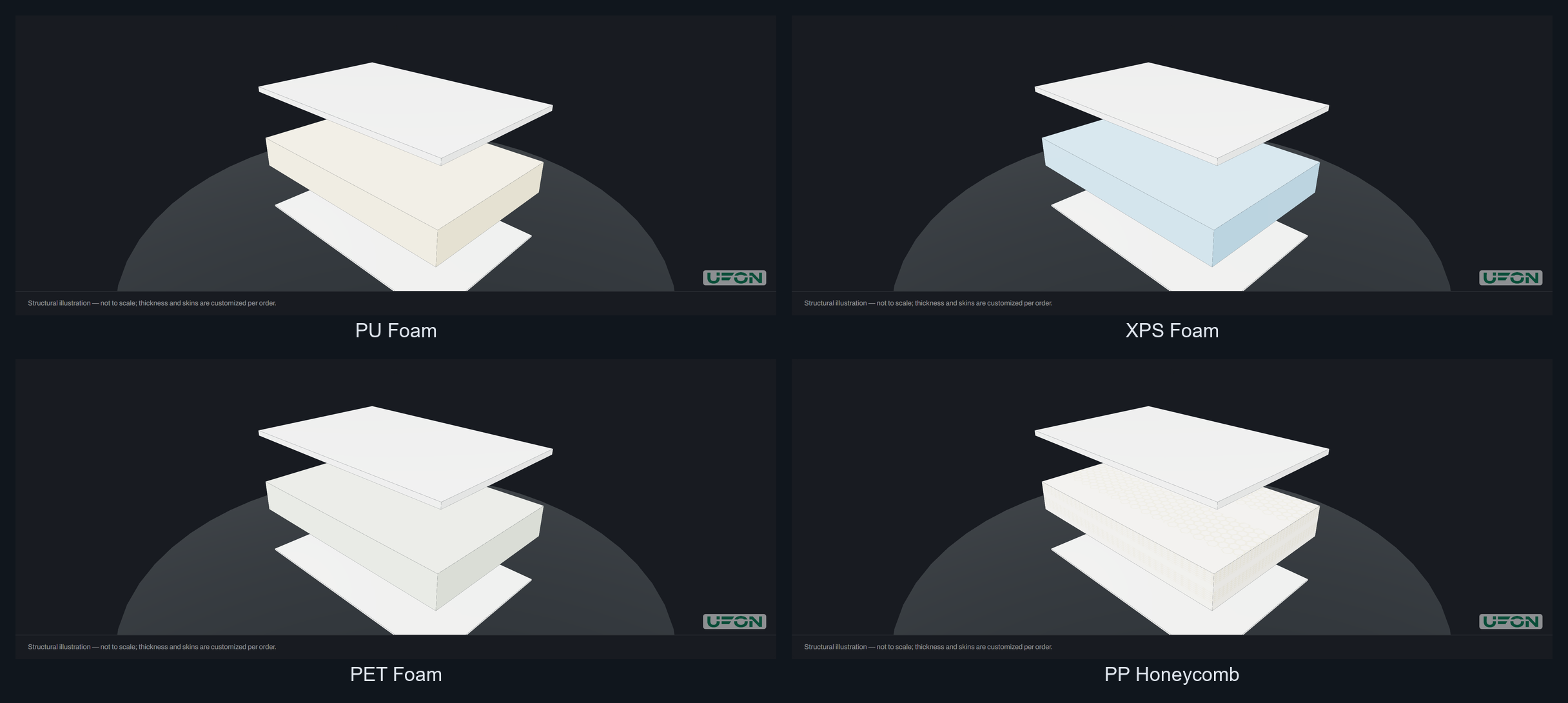
| 2 | Core & skin combination range | Which core (PU / XPS / PET / PP honeycomb) and skin (FRP, steel, stainless, aluminium) combinations are standard vs special | One core offered for every temperature class |
| 3 | CKD packing & loading plan | A packing list and indicative container-loading plan for your quantity | "We will see how many fit" after the order |
| 4 | Assembly documentation | Assembly manual, exploded views, torque specs; whether video or on-site support exists | Documentation "available on request" but never shown |
| 5 | Hardware & fittings scope | Whether hinges, locks, seals, profiles and lights ship with the kit, and to whose design | Hardware "to be sourced locally" with no specs |
| 6 | Quality records | Which inspection records ship with each order — dimensions, bonding checks, photos | Quality promised verbally, no records offered |
| 7 | Export packing & documents | Export crating standard and the document set (invoice, packing list, certificates of origin, fumigation where required) | Vague answers on export paperwork |
| 8 | Sample policy | Cost and lead time for a sample panel or a single trial kit | No sample path before a container-sized minimum order |
| 9 | Same-order spec consistency | Whether every body in one order ships to one confirmed drawing revision | "Minor variations are normal" with no revision control |
| 10 | Response discipline | How fast and how completely technical questions are answered during the enquiry | Slow or partial answers before you have even paid |
Score each answer as documented, promised, or avoided. Two or more "avoided" answers in the first five checks usually predicts how the rest of the project will go.
The Drawing Test
Send your chassis data and body dimensions, and ask for a concept drawing before you discuss price. A body builder comes back with questions — door position, sub-frame height, evaporator mounting — and then a drawing. A reseller comes back with a catalogue page. This single exchange tells you more about a supplier than any certificate on their website.
One Drawing Revision for the Whole Order
Multi-body orders fail quietly when unit three is built to a different revision than unit one. Ask how drawing revisions are controlled, and how the supplier guarantees that every kit in your order matches the approved sample. The answer should name a revision system, not a person.
What a Complete CKD Document Set Looks Like
For a flat-packed kit, "complete documentation" has a concrete meaning: an assembly drawing with dimensions and tolerances, a bill of materials keyed to the drawing, a packing and container-loading plan, assembly instructions with torque specifications, a hardware list with quantities, and the inspection records for your order. Ask each candidate to list these items back to you. Suppliers who build bodies for export will answer from a template they already use; suppliers improvising will answer in adjectives.
Red Flags in Quotes
Low quotes are not automatically bad quotes. But three patterns reliably precede expensive surprises.
The unspecified low price. A quote that reads "refrigerated body, 4.2 m, FRP panels" — with no panel thickness, no core density, no skin specification and no hardware list — is not a quote, it is a placeholder. When the contract says nothing, every deviation becomes defensible. Published sourcing guides for overseas panel buyers repeat the same warning: never accept "standard quality" as a specification.
Mixed insulation claims. Watch for a core described with thermal values from one material at a price consistent with another. Ask for the core datasheet and check that the numbers in the quote match the material named in the quote. Third-party published figures are indicative, not lab certificates — but a serious supplier is at least internally consistent.
Missing tolerances and acceptance criteria. If the quote never states dimensional tolerances, bonding-quality criteria or what happens when a panel arrives damaged, those terms will be written later — during the dispute, by whoever holds more leverage. Ask for the acceptance standard before you sign, not after.
How to Run a Sample or Trial Order
A sample order is not a smaller purchase; it is an audit you pay for once instead of many times. Order one kit, or a representative panel set, to your real specification — not the supplier’s demo spec. Require the full document set with it: drawing, BOM, packing list, assembly instructions. Inspect on arrival the way your customer would: dimensions against the drawing, skin and core against the datasheet, hardware completeness against the BOM. If you can, assemble it on a real chassis. Record every gap, because each gap is a sample of what a container-sized order will multiply.
A practical arrival inspection takes one afternoon: measure overall dimensions and door apertures against the drawing; if core density was quoted, cut or weigh a panel section to check it; cycle every hinge and lock; check seals for continuity at the corners; and photograph every deviation before you assemble. Send the photo set to the supplier the same day. Their response to documented deviations — replacement, credit, or argument — is the final check on the list, and the only one that cannot be run from your desk.
Only after the trial passes should volume pricing enter the conversation. A supplier who pushes you to skip the trial and "trust the container price" is telling you something.
Send the Same RFQ to Every Candidate
Supplier comparison only works when every candidate answers the same questions. A structured RFQ — chassis, cargo, temperature class, dimensions, quantity, destination, delivery format and acceptance records — forces comparable quotes and exposes who reads specifications and who sends templates. Our two-page RFQ checklist (free download below, no email gate) covers exactly these fields. Attach it to every enquiry you send — including the one you send to us.
Comparable quotes change the negotiation itself. When three suppliers price the same drawing, the same core and the same delivery format, the differences that remain are real: margin, efficiency and risk pricing. You stop negotiating against a number and start negotiating against a specification — and a specification, unlike a number, can be inspected on arrival.
FAQ
Is the cheapest quote usually the worst supplier?
No — and the most expensive is not automatically the best. Price only becomes meaningful after the ten checks are answered. A low quote with complete drawings, a clear BOM, a packing plan and documented quality records is a strong quote. A low quote without them is an unknown with a deposit attached.
Should I buy panels from a panel factory and build the body myself?
If you have in-house body engineering, assembly jigs and trained staff, buying panels from a specialist can work well. If you do not, the engineering you "saved" reappears as design errors, mismatched hardware and assembly delays. Be honest about which capability you actually have before choosing the split.
What certifications should a truck body supplier have?
Treat certificates as supporting evidence, not proof. A management-system certificate says a process exists; it does not say your drawing was followed. Ask for order-specific records — dimensional checks, bonding checks, pre-shipment photos — and verify a sample against the datasheet. For temperature-critical work, ask how the body design addresses thermal bridges, and validate the assembled body, not just the panel.
How many suppliers should I shortlist?
Three is practical: enough to compare, few enough to run proper checks on each. Send all three the same RFQ, score the answers with the ten checks, run a trial order with the best one or two, and only then negotiate volume. Comparing ten suppliers on price alone is slower than comparing three suppliers on evidence.
Sources & scope
Each source below was reopened and checked before use; the check date appears with its entry. Third-party figures are industry references, not UFON test results; project decisions require confirmed drawings, datasheets and destination-specific requirements.
- Fuqiang — Sandwich Panel Manufacturers in China: How to Choose the Right Factory and SupplierChecklist framing for comparing panel factories — product range, quality control, customization, export experience and communication; construction-panel context, not truck-body specific. Not UFON data. Accessed 2026-11-23.
- Sunnyda — How to Choose Quality Sandwich Panels When Buying from Overseas SuppliersPre-production samples, third-party testing and contract-term guidance, plus indicative steel-skin and core-density ranges for building panels; verify values against truck-body datasheets. Not UFON data. Accessed 2026-11-23.
- Rax Panel — Dry freight truck body panels: questions buyers askManufacturer-published buyer-question framework for dry-freight body panels used as a structural reference; no UFON or competitor performance claims are taken from it. Accessed 2026-11-23.